


Below are some precautions for self-priming pump installation
2022-05-13
Below, we will discuss the precautions for installing a self-priming pump.
Does a self-priming pump need a foot valve?
1. What happens if a foot valve is not installed?
Generally, a foot valve is not needed because the inlet of a self-priming pump usually has its own one-way valve, also known as a check valve. This prevents the liquid in the pump body from flowing back into the original pool after the pump stops, storing it in the pump body. The next time it is used, liquid does not need to be added again.
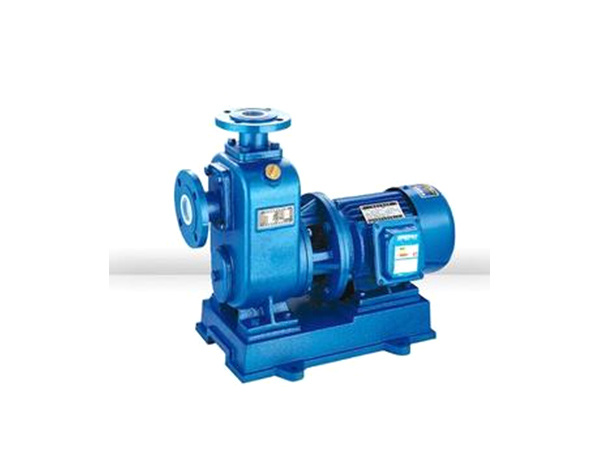
2. What happens if a foot valve is installed?
If a foot valve is installed, the effect will be better. If the one-way valve is damaged, the foot valve acts as a safeguard, preventing the pump from running dry. Furthermore, installing a foot valve ensures the pump's effective suction.
In another special situation, if the suction height difference is too large, or the suction pipe diameter is too large, and the volume exceeds the amount of liquid stored in the self-priming pump cavity, it will not work properly. In this case, a foot valve must be installed to ensure the safety and speed of self-priming.
Self-priming Pump Installation Precautions
1. Before installing the self-priming pump, a suitable concrete foundation should be made according to the basic dimensions of the self-priming pump. The foundation bolts should be pre-embedded during the concrete foundation process. The concrete foundation refers to large self-priming pump products; small self-priming pumps do not require a concrete foundation.
2. Before installing the self-priming pump, carefully check the pump bolts for looseness and any foreign objects that may have fallen into the pump body to prevent damage to the impeller during operation.
3. Place the self-priming pump on the concrete foundation. Place isolation pads between the base plate and the foundation. Adjust the height of the isolation pads to align the pump horizontally, then tighten the bolts.
4. The suction and discharge pipes of the self-priming pump cannot be supported by the water pump; separate brackets are needed to support the inlet and outlet pipes. The diameter of the inlet and outlet pipes must be consistent with the self-priming pump, especially the inlet pipe, which cannot be enlarged, as this will affect the self-priming height of the self-priming pump. If the inlet pipe of the self-priming pump is constricted during installation, the outlet pipe must also be constricted. We recommend configuring pipes with the standard diameter specified by the factory.
5. When the self-priming pump has dust covers at the outlet and inlet from the factory, remove the dust covers and connect them to the pipes. Note that if using a self-priming pump product with a quick-suction Z, the outlet pipe must be vertical for 1 meter before turning, otherwise, the water in the pump body is easily drained during self-priming.
6. For easy maintenance and safe use, regulating valves should be installed on the inlet and outlet pipes of the self-priming pump. A pressure gauge should be installed between the outlet valve and the pump to ensure that the self-priming pump operates within the rated flow rate and head, ensuring normal operation and extending the service life of the self-priming pump.
7. Before starting the installation of the self-priming pump, rotate the pump shaft and inject liquid into the pump cavity to fill the pump cavity and exhaust the air. Check for leaks and ensure that the impeller has no friction or jamming. If there is friction or jamming, disassemble the pump and check the specific cause for resolution.
Thank you for watching. That's all for today's explanation. See you next time.
Related information

Mobile:
Telephone:
Tel: Liu Fengxing13951151198 / 0523-88301008
E-mail:1911306499@qq.com
Address: Jiangdu Town Industrial Concentration Zone, Jiangyan City, Jiangsu Province
HUATAO GROUP
Leave a message online to get a free application solution
Copyright © 2025 Jiangsu Jiangjin Pump Industry Co., Ltd.